

Blog
7 Reasons to Upgrade Your Office Furniture in 2026
If your workspace still reflects pre-hybrid assumptions, 2026 is a smart year to rethink it. Office furniture is no longer just a visual decision. It now affects how comfortably people work, how efficiently teams use space, and how well a business adapts to new expectations around flexibility and technology. In Dubai, that matters even more because office occupiers are balancing resilient demand, smaller space requirements, and rising expectations around workplace quality. For companies researching office furniture options in Dubai, the best upgrade strategy is often not “replace everything,” but “improve the pieces and layouts that have the biggest daily impact.”

1 – Ergonomics
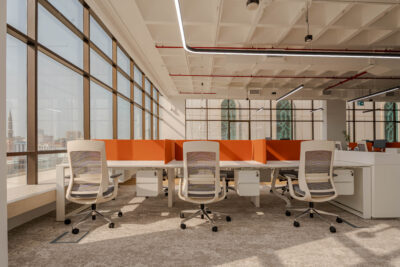
NIOSH says ergonomics helps reduce or eliminate work-related musculoskeletal disorders and improve safety, while OSHA’s computer workstation guidance points to practical basics such as lower-back support, correct monitor height, elbow positioning, and proper foot support. In real offices, that translates into a simple truth: outdated seating and fixed desks can quietly create discomfort, distraction, and fatigue. Upgrading chairs, desks, and workstation dimensions is not just about posture. It is about turning high-use furniture into a healthier, more supportive part of the workday.
2 – Hybrid Work
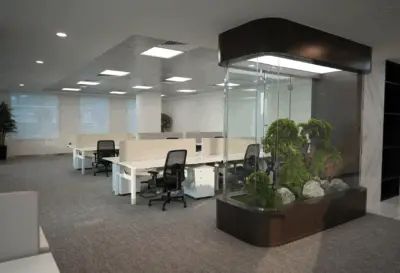
87% of organizations globally already operate with a hybrid program as per JLL’s 2024 report, and the same research showed rising investment in utilization tracking, private seating, and more technology-led workspace planning. Gensler’s 2025 workplace research also shows that people still value the office, but they want better-performing environments, not just more days at a desk. That means rows of identical workstations are no longer enough. Offices increasingly need a better mix of focus areas, sit-stand options, touchdown points, collaboration space, and privacy solutions that support different work modes through the week.

3 – Every Square Foot Counts.
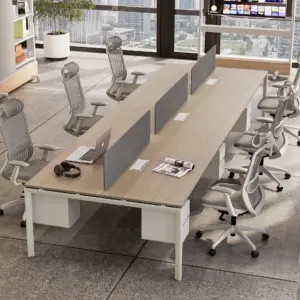
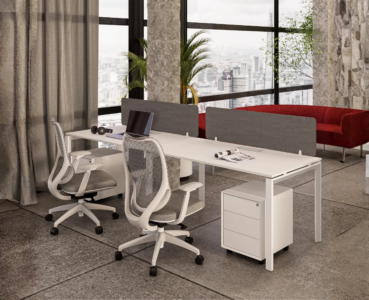
Dubai offices have to make every square foot work harder. JLL said limited prime stock continued to shape leasing activity in Dubai in Q1 2026, while Savills reported that 97% of office deals in the same quarter were for spaces below 3,000 square feet. That is a strong sign that many occupiers are optimizing smaller footprints rather than taking more space. In that context, smarter office furniture can be more cost-effective than relocating. Modular workstations, compact meeting settings, flexible storage, and reconfigurable layouts can help a business increase usable capacity without expanding its lease.
4 – Health Matters.
Dubai Municipality’s Green Building Regulations require suitable ventilation and set indoor air quality thresholds for new buildings, including pre-occupancy limits for formaldehyde and total VOCs. The same regulations require low-VOC paints, coatings, adhesives, and sealants, and they state that composite wood products used in interiors must not contain added urea-formaldehyde resins. For companies upgrading an office in 2026, that means furniture choices should be evaluated as part of a healthier fit-out strategy, especially if the refresh involves built-in storage, partitions, wood-based components, or other interior elements that contribute to indoor emissions.

5 – Retention.
Gensler’s 2025 Global Workplace Survey found that employees with a high degree of choice in where and how they work are 2.5 times more likely to say their workplace supports productivity, and employees in great workplaces are nearly three times more likely to stay with their company. That matters in Dubai, where official policy signals increasingly reflect the value of flexibility and employee comfort. Dubai Government’s Ramadan policy in 2025 allowed up to two days of remote work per week for eligible employees, and the expanded “Our Flexible Summer” initiative followed a pilot that reported productivity gains and employee satisfaction as high as 98%. Better furniture is not the whole answer, but it has clearly become part of the employer experience.
6 – Technology and Acoustics Support.
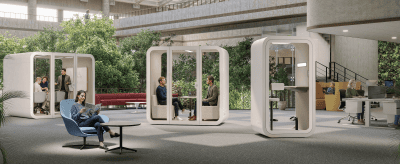
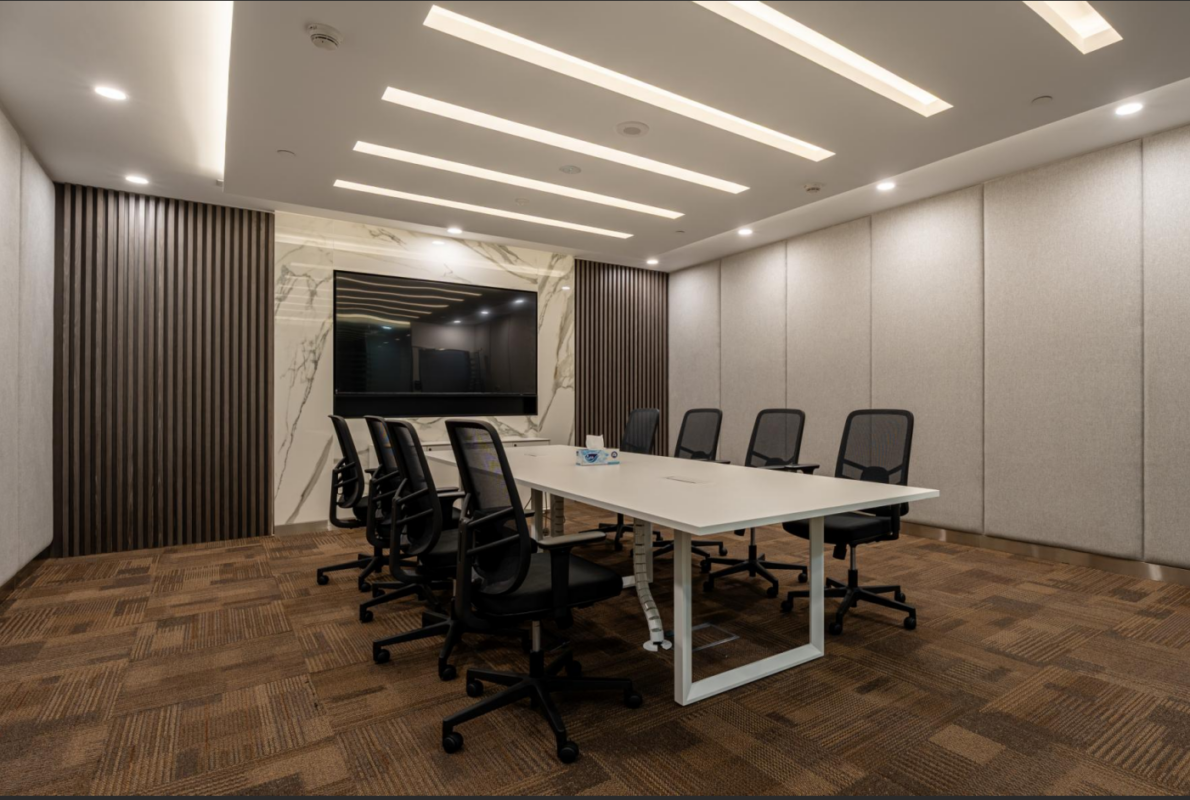
JLL found that 40% of organizations had invested in enhanced conference room technology, while hybrid planning is increasingly shaped by sensors, analytics, and more dynamic space management. That changes the furniture brief. Desks need cleaner cable paths and power access. Meeting tables need to support screens and video calls without clutter. Open offices need acoustic control, not just visual style. This is why upgrades in 2026 should think beyond desks and chairs alone. Privacy booths, acoustic office pods, and tech-ready meeting furniture can solve practical problems that older layouts were never designed to handle.
7 – Procurement Quality and Value.
In 2025, BIFMA published the 2024 edition of the LEVEL e3 furniture sustainability standard, and the transition rules moved new certifications to that standard by April 21, 2026. USGBC’s LEED v5 low-emitting materials credit also explicitly includes furniture emissions criteria. Together, those signals show that workplace buyers are being pushed to evaluate more than price and appearance. Durability, emissions, sustainability credentials, and documentation quality are becoming more important in furniture selection. That makes 2026 a good time to retire low-grade pieces that may need repeated replacement and move toward products that fit stronger procurement requirements.
There is also a practical Dubai angle: local delivery, planning, and installation matter. Urban 411 positions its offer around a Dubai workshop and showroom, space-planning support, project quotations, fast-delivery messaging, and installation across the UAE. In a market where occupier confidence remains solid and layouts need to perform better, local supplier responsiveness can reduce project friction. The smartest upgrade plans are usually phased, not dramatic. Start with the furniture employees use longest, then move to the layouts that most affect collaboration, video meetings, privacy, and space efficiency. That approach improves the workplace without turning the refresh into an unnecessarily disruptive project.
Upgrading office furniture in 2026 is not about following a trend cycle. It is about aligning your workplace with how people work now, what Dubai offices can justify financially, and what stronger health, sustainability, and workplace standards increasingly expect. If your current setup causes discomfort, wastes space, limits collaboration, or makes the office feel older than the business itself, a phased upgrade is easier to defend than another year of compromise.