

Blog
How to Choose the Right Office Furniture for Different Business Needs
Most UAE businesses select furniture before confirming zone compliance requirements, measuring the actual space, or understanding how their team works.
This guide covers the right order of decisions, built around 23 years of fitting out offices across Dubai and Abu Dhabi.
Start With Your Space and Location
Floor plan and location determine everything else. Whether you are in a Dubai free zone, an Abu Dhabi commercial tower, or a mainland business park in Sharjah, your zone authority imposes requirements that directly affect what furniture you can specify.
Free Zone Guidelines
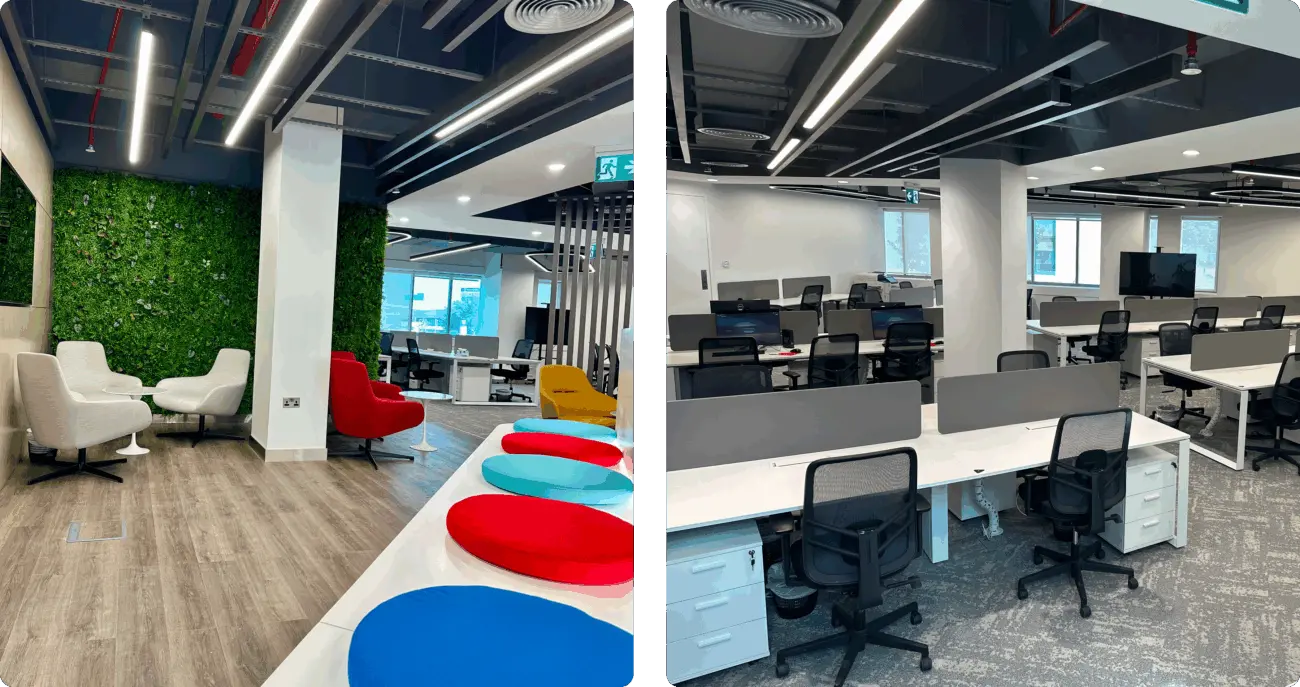
DIFC, Dubai Internet City, JAFZA, and ADGM each publish fit-out manuals specifying approved materials, finishes, and installation standards. Businesses that select furniture before reading those guidelines regularly face rejection at inspection, adding removal and replacement costs on top of the original spend.
Actual Floor Area
Structural columns, MEP risers, and server room allocations eat into usable floor area that the leasing plan does not show clearly. On-site measurements consistently come in five to fifteen percent below the stated square footage across UAE commercial fit-outs.
Always measure in person before calculating workstation capacity.
Circulation Clearances
UAE building regulations and most zone authorities require minimum circulation widths between workstation rows and along emergency exit routes.
The standard applied across Dubai and Abu Dhabi fit-outs is 1.2 meters between rows as a working minimum. Furniture specified without those clearances will fail a safety inspection.
Dubai vs Abu Dhabi: Two Different Markets
Dubai and Abu Dhabi are not the same office furniture market. The differences in zone structure, industry mix, and procurement culture directly affect what you should specify and how you should plan.
Dubai Offices
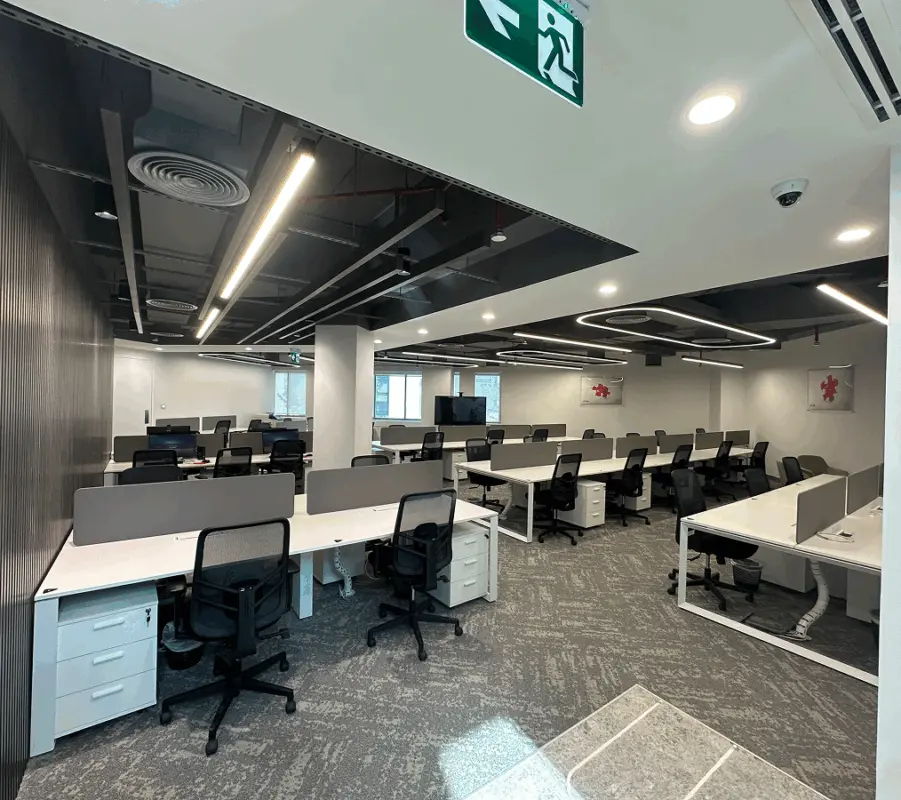
Each of Dubai’s major free zones, including DIFC, JAFZA, and Dubai Internet City, operates under its own fit-out authority with distinct compliance standards. Modular and hybrid-ready furniture dominates here, driven by fast-growth tech and financial services businesses running flexible headcounts.
Specification decisions move quickly and prioritize adaptability over formality.
Abu Dhabi Offices
Most Abu Dhabi commercial fit-outs fall under the Abu Dhabi Department of Municipalities and Transport building standards, with government and semi-government projects also subject to Estidama sustainability requirements.
Procurement timelines are longer and specifications more formal. Client-facing areas carry particular weight here, where most businesses are dealing directly with government stakeholders.
What Changes Between the Two
| Factor | Dubai | Abu Dhabi |
| Zone Compliance | Each free zone (DIFC, JAFZA, DIC) has its own fit-out authority and standards | Falls primarily under the Department of Municipalities and Transport |
| Material Grades | Wider range of finishes accepted across most free zones | Higher-grade, documented materials often required on government projects |
| Sustainability | Free zones do not enforce Estidama standards | Government and semi-government projects subject to Estidama requirements |
| Procurement Speed | Faster decisions, driven by startup and corporate culture | Longer timelines with formal approval processes |
| Client-Facing Spec | Design-led, premium aesthetic expected | Conservative, formal specification aligned to government stakeholder expectations |
Match Furniture to How UAE Teams Work
Long working hours, formal client interactions, and rapid headcount growth are consistent realities across both markets that furniture choices need to account for.

Working Hours and Ergonomics
The standard UAE working day across finance, legal, and professional services runs eight to ten hours. Adjustable lumbar support, seat height adjustment, and breathable mesh are the baseline specification for any chair used across a full UAE working day.
Clients who invest correctly in seating from the start are still using the same chairs five years on.
Client-Facing Spaces
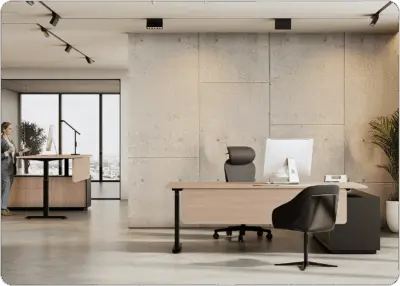
In the UAE market, your reception area, boardroom, and executive office directly affect how clients and government stakeholders perceive your business. An under-invested reception communicates the wrong things before a single meeting starts. Budget these spaces separately at a higher specification tier.
Hybrid and Hot-Desking
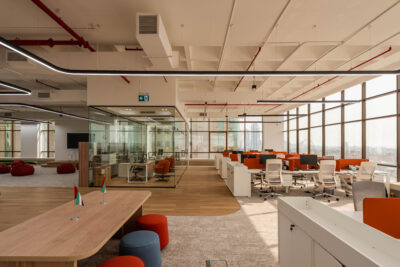
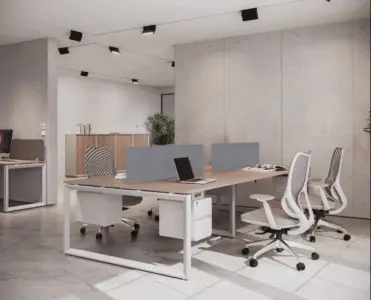
Post-2020 working patterns across Dubai free zones have shifted significantly, with many businesses running daily headcounts that vary by 30 to 50 percent. Modular workstation clusters and smart office pods for private calls and focused work are now standard across open-plan fit-outs in Dubai Media City, DIFC, and Dubai Internet City.
Storage Requirements
UAE businesses in financial services, legal, and government contracting generate significant volumes of physical documentation. Based on projects completed across Dubai and Abu Dhabi, initial storage estimates typically run 30 to 40 percent below what the office actually needs once operational.
UAE-Specific Requirements That Affect Specification
These are factors a generic buying guide will not cover. Use Urban 411 to work through them before finalizing a spec.
Air Conditioning and Materials
UAE offices run heavy air conditioning year-round. Mesh-back chairs outperform PU leather in these conditions because airflow matters even in a cool room. High-pressure laminate desk surfaces handle the indoor-outdoor humidity cycle better than solid wood, which warps over time in the UAE climate.
Height-Adjustable Desks
Prolonged sitting across a ten-hour day is a documented health risk. Height-adjustable desks have moved from a premium option to standard specification across most Dubai and Abu Dhabi financial and professional services fit-outs since 2021.

Sustainability Requirements
Abu Dhabi government and semi-government projects increasingly carry sustainability obligations tied to the UAE Net Zero 2050 strategy and Estidama. If your project falls under these frameworks:
- Material sourcing and certifications need to be documented
- Low-VOC finishes and sustainable board products may be required
- LEED or Estidama credit documentation from your supplier may be needed at handover
What to Confirm Before Choosing a Supplier
- Ready stock: Does the supplier hold UAE stock for three to seven day delivery, or are they ordering overseas on a six to ten week lead time
- Free zone experience: Have they completed fit-outs in your specific zone and do they understand that zone’s approval process
- Itemized quotation: Does the quote break down every line item by product, dimensions, quantity, and unit price
- Space planning: Do they provide 2D or 3D layout planning before the order is placed
- After-sales coverage: What does warranty cover per category and how are defect claims handled post-installation
Conclusion
Choosing office furniture in the UAE means getting the sequence right: confirm zone compliance, measure the actual space, understand your specific market whether Dubai or Abu Dhabi, then specify how your team works. Request a free project quote to start with a plan built around your space, location, and headcount.